BUDDHISM FOUNDATION FOR COMMUNITY DEVELOPMENT (BFCD)
BFCD-5 Years Strategy (2026-2030)
This document is organized into two main chapters. Chapter I provides an overview of BFCD, including its background, vision and mission, goals and objectives, program activities, major achievements, staffing, and funding from its inception to the present.
Chapter II presents the BFCD Strategic Plan for the next five years (2026–2030). It outlines the organization’s Vision, Mission, Core Values and Working Principles, goals and objectives, and strategic priorities for the period 2026–2030. This chapter also describes the organizational arrangement and includes several annexes, such as the Board of Directors (BoD) structure and working procedures, financial and staff policies, appreciation letters from funding agencies, and other relevant supporting documents.
The main purpose of this document is to provide a concise overview for BFCD partners, supporters, and other stakeholders, enabling them to better understand the organization’s past activities, achievements, and lessons learned, as well as its strategic priorities and resource needs for the next five years.
CHAPTER I: PAST WORKING EXPERIENCES OF BFCD (2010–2025)
1. Background
Buddhism Foundation for Community Development (BFCD) was officially registered with the Ministry of Interior (MoI) of the Royal Government of Cambodia on 12 January 2009. Since its establishment, BFCD has actively implemented programs across Cambodia, focusing on Siem Reap, Banteay Meanchey, Battambang, Pursat, Kampong Chhnang, Kampong Thom, Kampot, and Svay Rieng. Its work spans multiple sectors including livelihoods enhancement, natural resource management, agriculture and livestock development, eco-tourism, skills and employment, health, education, and climate change adaptation.
2. Vision and Mission
Vision: Improved living conditions, respect, and dignified life for poor and vulnerable people in Cambodia.
Mission: BFCD collaborates with local communities, government agencies, private sector actors, and international and national development partners to:
i. Manage natural resources, agriculture, forestry, and other land uses and
ii. Develop business and vocational skills for poor and vulnerable populations
3. Goal and Main Objectives
BFCD aims to improve the quality of life of poor and vulnerable people in Cambodia through gender-responsive, transparent, accountable, sustainable, and equitable services. Main objectives
include:
a) Improve Livelihoods, business and Income Generation – Enhance economic resilience by providing practical skills, livelihood opportunities, and improved access to markets
b) Strengthen Skills Development and Education – Provide vocational training, practical education, and life skills to increase employment opportunities and self-reliance.
c) Promote Social Inclusion – Improve living conditions and social participation of marginalized groups, including orphans, persons with disabilities, disadvantaged students, the elderly, and other vulnerable populations.
d) Improve Community Health and Environmental Sustainability – Promote healthier living environments and sustainable natural resource management.
e) Strengthen Community Capacity and Local Development – Empower communities to participate in local development and decision-making processes.
f) Strengthen Institutional Capacity and Partnerships – Enhance BFCD’s operational capacity, partnerships, and resource mobilization for effective community development programs.
4. Program Activities
The following are major program activities and specific field servicing
by the BFCD:
- Natural Resource Management: Forest management, tree planting, land restoration, environmental protection
- Agricultural Production: Rice cultivation, livestock and poultry raising, agricultural marketing, value-chain development
- Vocational and Life Skills Development: Business literacy, food processing, motorcycle repair, salon and beauty, AC installation and maintenance, barista, plumbing and electrician, computer skills, English language training
- Education and Awareness: Health, education, water resource management, agroforestry, disaster and climate change, environmental conservation.
5. Key Achievements of BFCD
- Increasedagricultural productivity and diversification
- Small
business and entrepreneurship development - Enhanced access to markets and value chains
- Vocational and technical skills training
- English language and computer literacy
- Job placement and career development support
- Access to education and social services
- Gender equality and inclusion of vulnerable groups
- Youth and community leadership development
- Improved community health, sanitation, water management
- Environmental protection and climate resilience
- Strengthened community organizations and leadership
- Participatory planning and governance
- Community-based natural resource management
- Organizational strengthening and professional management
- Partnership development with government, NGOs, and donors
- Sustainable resource mobilization
- Services in various skills training provided included salon and beauty, AC installation and maintenance, barista, water supply and electrician, computer, and English language skills.
6. Current Staffing and Capacity Areas
BFCD has 28 staff members supported by board members, advisors, and subject experts. Staff roles include Executive Director, administrative and finance personnel, program coordinators, and agriculture/business specialists deployed across eight provinces.
Key functional teams
- Project Management & Leadership: Overall coordination, strategic oversight,
donor liaison - Operations Team: Financial management, procurement, logistics, administrative support
- Technical Team: Climate-smart agriculture, agricultural value chains, livelihood enhancement, community engagement, marketing, IT, and digital activities
- Training Specialists: Curriculum development, ToT, business literacy, and digital training
- MEL-KM Team: Monitoring, evaluation, learning, knowledge management, data collection, communications, workshops, multi-stakeholder coordination
Key Strengths
- Proven experience in business literacy and entrepreneurship programs for rural communities
- In-depth understanding of Cambodia’s agricultural value chains and smallholder challenges
- Practical, participatory, and learner-centered training methodologies
7. Funding Supports
BFCD has received funding from:
- Habitat For Humanity Cambodia from many funding sources
- Asian Development Bank (ADB) via the Ministry of Water Resources Meteorology (MoWRAM).
- UNDP via the Ministry of Environment (MoE)
- IFAD via MEF/SAAMBAT
- Multiple private donors, firm, and other NGOs in terms of cooperation and partnership arrangements in total of 18.
The table below summarizes the subcontracts and collaborative engagements with private firms, NGOs, and government agencies through which BFCD delivered services, mainly in training and capacity development related to business literacy, vocational skills, agriculture, and livelihood enhancement.
| No. | Period | Main Activities, Clients/Beneficiaries and Locations of Intervention | Project Name | Firm | Contract Status |
|---|---|---|---|---|---|
| 1 | 3 years (2023–2025) | Provided vocational, business, and agriculture trainings to community youths in 6 provinces: Banteay Meanchey, Battambang, Kampong Chhnang, Kampong Thom, Kampot, Svay Rieng. | Sustainable Assets for Agriculture Markets, Business and Trade (SAAMBAT), funded by IFAD through Ministry of Economy and Finance (MEF). | BFCD / SAAMBAT / MEF | Sub-contract and completed |
| 2 | 2 years (2024–2025) | Provided trainings on environment, forestry conservation, management, business skills, planning and proposal writing to committees, members, and local authorities in Choam Thlork and O Panha, Kampong Thom Province. | Integrated Natural Resource Management (INRM), funded by UNDP under Ministry of Environment (MOE). | BFCD / INRM / MOE | Sub-contract and completed |
| 3 | 3 years (2015–2017) | Provided trainings to committees, water user groups, rice farmers, and local authorities on agriculture, business, marketing, and financial management in Siem Reap and Pursat Provinces. | Capacity Building Training to Farmer Water User Community (FWUC), funded by ADB, executed by Ministry of Water Resources and Meteorology (MoWRAM). | BFCD / MoWRAM / ADB | Sub-contract and completed |
| 4 | 2 years (2009–2010) | Enhanced capacity of farmer families in vegetable growing, chicken feed processing, business literacy, marketing skills, and health & sanitation awareness in Siem Reap Province. | Sustainable Livelihood Improvement and Health Education Project, executed by Habitat for Humanity Cambodia, funded by TCF, EU, WFP, and RCG. | BFCD / Habitat for Humanity Cambodia | Sub-contract and completed |
CHAPTER II: FIVE-YEAR STRATEGIC PLAN (2026–2030)
1.Vision, Mission, Core Values and Working Principles
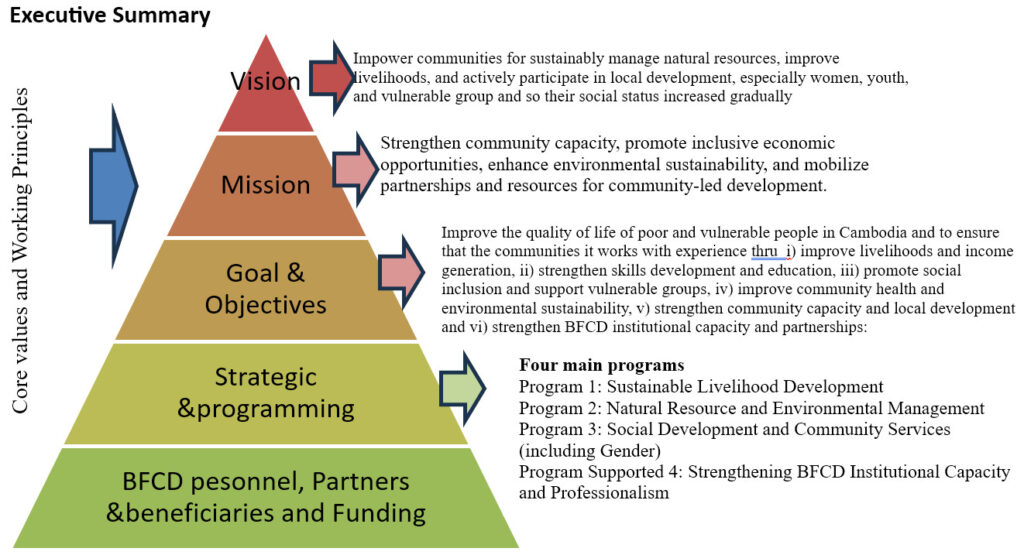
Vision is to empower and resilient communities that sustainably manage natural resources, improve livelihoods, and actively participate in local development, especially women, youth, and vulnerable groups.
Outcomes by 2030:
- Stronger, resilient communities
- Improved livelihoods and reduced poverty
- Sustainable natural resource management
- Inclusive and participatory governance
Mission is to strengthen community capacity, promote inclusive economic opportunities, enhance environmental sustainability, and mobilize partnerships and resources for community-led development.
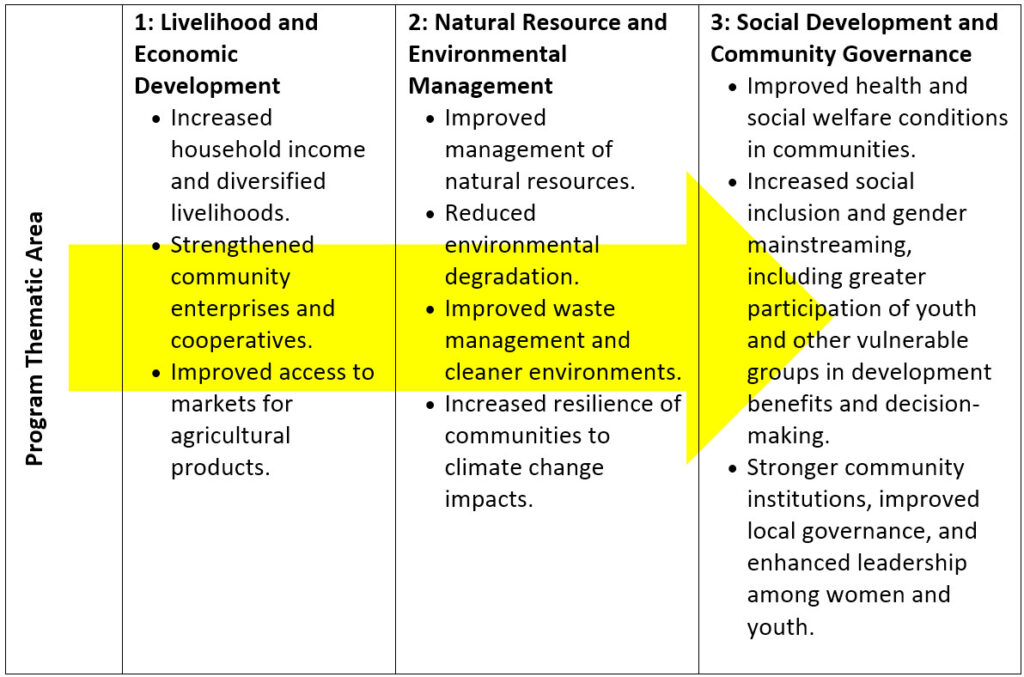
Thematic Program Areas
- Livelihood and Economic Development – Diversified livelihoods, strengthened cooperatives, improved market access
- Natural Resource and Environmental Management – Sustainable resource management, reduced degradation, climate resilience
- Social Development and Community Governance – Improved health and welfare, gender inclusion, youth and women leadership.
Core Values
BFCD defines Fine (05) core values for the implementation and achievements of the plan included:
| Partnerships | Empowerment and Inclusiveness | Accountability and Transparency | Results based Monitoring and Evaluation, Learning and Sharing | Sustainability |
|---|---|---|---|---|
| Oriented | ||||
| BFCD will work with all concerned stakeholders from Public, Development Partners, Private sectors and People. | BFCD respects for human dignity, poor and vulnerable groups, female, to empower them through knowledge, skills development, and decision making. | BFCD commits to accountability, and transparency in all programs, partnerships, and financial management. | BFCD commits to have result-based management and reporting including learning and disseminating the experiences. | BFCD commits all programs to promote sustainable development and resilience to technology, climate change and market resolutions. |
Working Principles
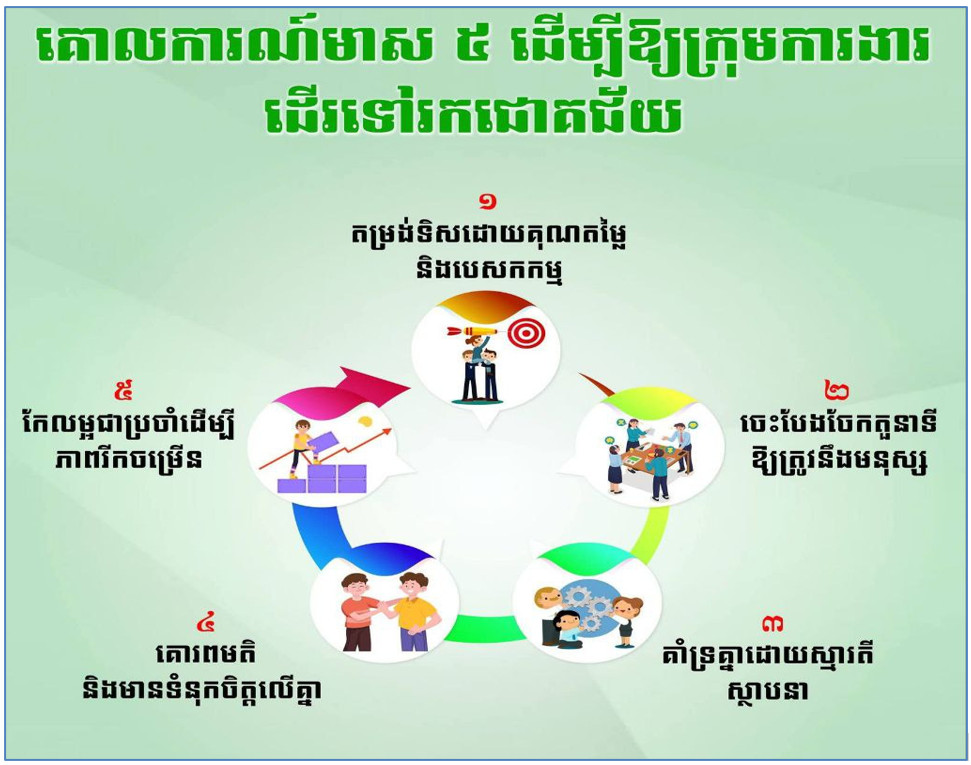
To have greater the BFCD vision, and mission as well as achievements of the programs, BFCD and its personnel involved is taking FIVE (05) main golden working principles in all works (see a figure below quoted from Live Skills because it aligns with BFCD practices and future works.
2. BFCD Goals and Objectives
GoalsImprove the quality of life of poor and vulnerable people in Cambodia and to ensure that the communities it works with experience:
- Better livelihoods, business and incomeImproved
- health and education
- Enhanced social inclusion and participation
- Sustainable management of natural resources
- Stronger community institutions and leadership
Objectives
- To achieve the goals and objectives should to
- Improve livelihoods, business and income generation
- Strengthen skills development and education
- Promote social inclusion and support vulnerable groups
- Improve community health and environmental sustainability
- Strengthen community capacity and local development
- Strengthen BFCD institutional capacity and partnerships
3. Strategic Planning (2026–2030)
3.1. Programing
There are three program thematic areas, three programs and one supporting program which the next five years that BCD likely focus including:
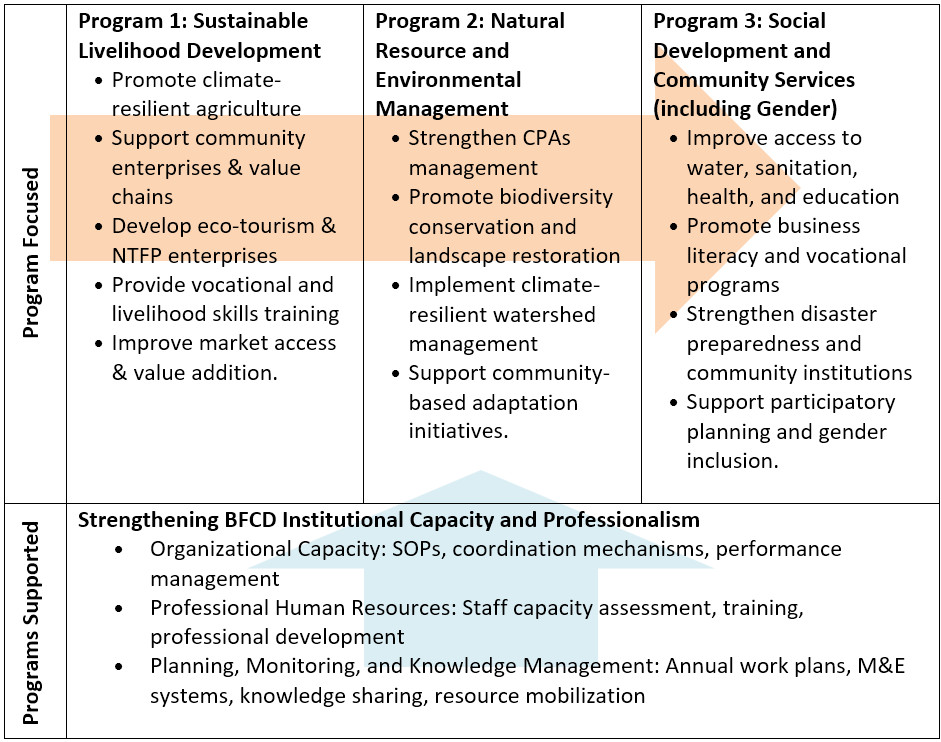
3.3. Efforts for Sustainable Financing and Funding Sources
Funding and the sustainable of funding for the organization is crucial to not only implement the strategies program but also to ensure the smooth operation of the organization and therefore, the following engagement strategies will be pursued to mobilize additional financial resources.
Project-Based and Research Funding
- Sub-contracting arrangements.
- Research and study grants.
- Joint venture funding with development partners.
Government Funding
- National and local government budgets.
- Community development funds under decentralization programs.
- Commune Investment and Development Funds (CIF).
International Development Partners include:
- United Nations Development Programme
- World Bank
- Asian Development Bank
- IFAD
- EU
- International Fund for Agricultural Development
- Food and Agriculture Organization
- Global Environment Facility
Additional financing opportunities may include:
- Green Climate Fund
- Carbon finance and REDD+ initiatives
- Public–private partnerships for community enterprises and sustainable tourism investments.
3.4. Partnership Arrangements and Linkages
For the next five-year period, BFCD will strengthen multi-level partnerships to effectively promote community development, improve livelihoods, and enhance human health. These partnerships will include financial support, technical cooperation, and collaborative program implementation.
Partnership arrangements will be periodically reviewed to identify gaps and inform the development of future strategic plans.
Government Agencies
- Rural development
- Agriculture
- Environment
- Water resources
- Social services
Local Authorities
- Provincial administrations
- District administrations
- Commune councils
- Community committees
Development Partners
Joint program implementation with UN agencies, EU, IFAD, development banks, and international NGOs, including access to funding opportunities through competitive project proposals and research grants.
Civil Society Organizations
- Community-Based Organizations (CBOs)
- Local NGOs
- Research and academic institutions
Private Sector
- Agribusiness companies
- Tourism operators
- Agricultural value chain partners
- Other private sector stakeholders.
The estimated budget required to implement the five-year strategic plan is approximately USD 5–10 million, and it is expected to benefit at least 20,000 households (approximately 1,000,000 people, of whom at least 30% are women).
4. Organizational Arrangement
BFCD organizational structure
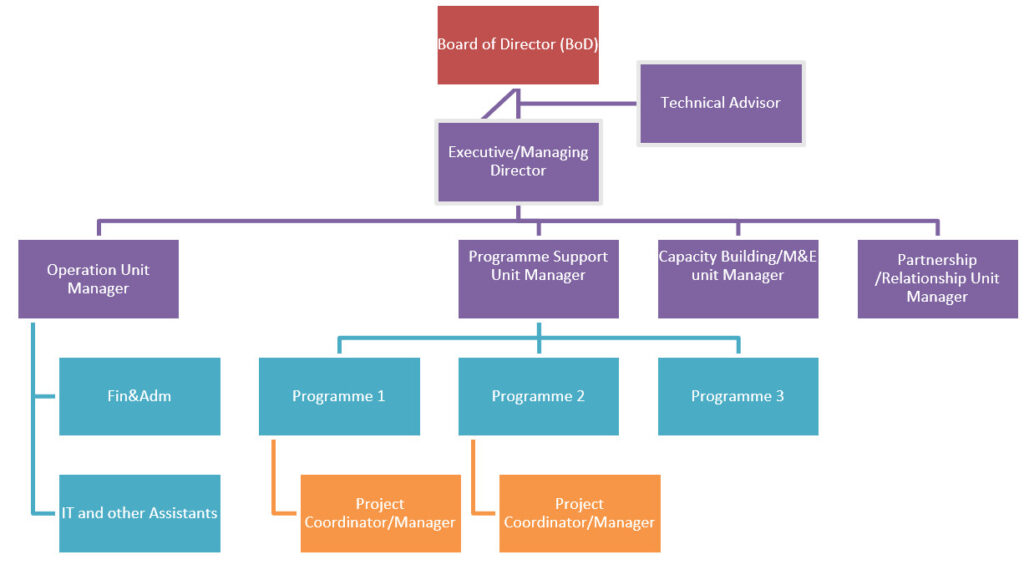
A board structure and its working principle/ToR is attached in Annex 1.
Key staff (more likely permanent)
• Board Chair and Members
• Executive Director
• Technical Advisor
• Operation Unit Manager
• Programs Support Unit Manager
• Capacity Building/M&E And Communication Unit Manager
• Partnership And Relationship Cum Fund Rasing Unit Manager
Key Personnel Leadership Roles
Board of Directors
The BFCD Board provides overall leadership, strategic guidance, and oversight to ensure the organization operates effectively and achieves its vision, mission, and goals. The Board also supports resource mobilization, partnership development, organizational strengthening, and performance monitoring.
Executive Director
The Executive Director leads the overall management and administration of BFCD, working under the guidance of the Board. Responsibilities include:
• Ensuring programs align with BFCD’s vision, mission, and strategic goals
• Overseeing daily operations and program implementation
• Monitoring and evaluating program performance
• Managing finances and ensuring accountability
• Reporting regularly to the Board on organizational progress
• Leading resource mobilization and partnership development
• Representing BFCD at national and international events
Technical Advisor
The Technical Advisor provides expert guidance and support to the Executive Director and program teams to ensure program quality, effectiveness, and sustainability. Key responsibilities include:
• Providing technical input for project concept notes, proposals, and program strategies
• Supporting capacity building and training initiatives
• Documenting best practices, lessons learned, and research findings
• Building technical networks and partnerships
• Supporting funding acquisition
Operations Unit Manager
The Operations Unit Manager ensures efficient and transparent management of BFCD’s administrative, financial, and logistical operations. Responsibilities include:
• Overseeing daily administrative operations
• Maintaining internal policies, procedures, and documentation systems
• Ensuring compliance with organizational policies, donor requirements, and national regulations
• Supervising key staff in areas such as IT, finance, administration, procurement, and logistics
Programs Support Unit Manager
The Programs Support Manager coordinates and supports planning, implementation, monitoring, and reporting of all BFCD programs. Responsibilities include:
• Ensuring program activities align with strategic goals
• Coordinating program monitoring, evaluation, and reporting
• Ensuring compliance, quality assurance, and results documentation
• Managing knowledge sharing, partnership coordination, and resource mobilization support
Capacity Building & M&E Unit Manager
This manager is responsible for strengthening staff and community capacity while ensuring effective monitoring, evaluation, and learning (MEL) across all programs. Responsibilities include:
• Supporting evidence-based planning and program improvement
• Ensuring accountability to partners and beneficiaries and
• Other tasks would be needed
Partnership & Relationship Unit Manager
The Partnership & Relationship Unit Manager develops and strengthens strategic relationships with key stakeholders to support program implementation and sustainability. Key responsibilities include:
• Engaging with donors and stakeholders
• Identifying new funding opportunities and collaborative initiatives
• Building and maintaining networks
• Representing BFCD in relevant forums and partnerships
Non-Permanent Staff or Experts
These staff members are recruited based on the availability of project funding and are not engaged on a routine or full-time basis. Their involvement depends on the specific needs, scope, and duration of individual projects.
If long-term funding becomes available, some of these staff or experts may be offered longer-term or permanent positions within BFCD.
The Terms of Reference (ToR) for each non-permanent staff member or expert will be developed and agreed upon according to the specific job requirements, project scope, nature of the assignment, and availability of funding.
5. References and Contacts Details
The annexes include supporting documents such as the NGO registration certificate, appreciation letters, staff policy, financial policy, and the board of directors’ structure and working procedures, serving as additional information and reference material.
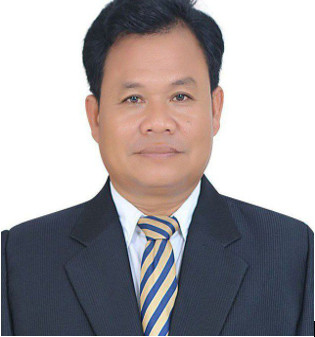
For further information, please contact:
DR. UM RATANA
Executive Director
Buddhism Foundation For Community Development (BFCD)
Located in Slor Kram village, Slor Kram commune,
Siem Reap district, Siem Reap Province
Tel: 012 309 707 / 069 309 707
Email: rattana.bfcd@gmail.com